At Musser Automotive in Bowling Green, KY, we see firsthand how frustrating a recurring check engine light can be. Since opening our doors in 2014, our ASE-certified and AAA-approved team has focused on one thing above all else: diagnosing problems correctly the first time. We specialize in electrical diagnostics, engine performance issues, and complex repairs on Ford and Chevy vehicles, and we take a consultative approach to every situation so our customers fully understand what’s happening with their vehicle.
One of the most common issues we diagnose is the P0171 trouble code. If your check engine light keeps turning on, even after you’ve had it looked at, there’s a good chance the root cause hasn’t been properly identified. This code indicates a "lean condition," meaning your engine is getting too much air and not enough fuel. While that might sound simple, the underlying cause is often anything but. Properly diagnosing it requires real experience, not guesswork, especially on Ford and Chevy vehicles where multiple systems interact to maintain the correct air-fuel ratio.
What a P0171 Code Actually Means
A P0171 code means your engine’s air-fuel mixture is out of balance. Modern engines are designed to run within a very precise ratio to maintain performance and meet emissions standards. When that balance is off, your vehicle’s computer adjusts fuel delivery to compensate. When it can’t correct the issue anymore, it triggers the check engine light.
According to the EPA vehicle emissions guidelines, even small imbalances in this ratio can affect engine efficiency, emissions output, and long-term reliability. That’s why this code shouldn’t be ignored. In real-world conditions, especially with higher mileage vehicles, these small imbalances often point to wear-and-tear issues that build over time rather than a single obvious failure.
Common Symptoms Drivers Experience
In our experience working on Ford and Chevy vehicles, P0171 rarely shows up without warning signs. Most drivers notice subtle changes before the check engine light becomes a constant issue, but those early symptoms are easy to overlook.
You might experience a rough idle when the vehicle is sitting still, hesitation during acceleration, or a noticeable drop in fuel economy. In some cases, the engine may feel underpowered or inconsistent, especially when driving at highway speeds. We also commonly see situations where the vehicle runs fine when cold but begins acting up once it reaches operating temperature. These patterns are important clues that help guide proper diagnostics.
Another detail many drivers mention is that the issue seems to come and go. That inconsistency is often a sign of a sensor-related issue or a small vacuum leak that only becomes noticeable under certain driving conditions. Without proper testing, these intermittent problems can easily be misdiagnosed.
The Most Common Causes We See in the Shop
What we commonly see in our shop is that a P0171 code is not caused by a single failure point, but rather a system imbalance. One of the most frequent issues is a vacuum leak. This allows unmetered air into the engine, throwing off the air-fuel ratio without the computer fully recognizing where the extra air is coming from.
Another common cause is a faulty or contaminated mass airflow sensor (MAF). When the MAF sensor sends incorrect data, the engine control module calculates the wrong amount of fuel to inject. Over time, this leads to a persistent lean condition that cannot be corrected through normal adjustments.
Fuel delivery problems can also play a role. Weak fuel pumps, clogged injectors, or restricted fuel filters can prevent the engine from receiving the fuel it needs, even if everything else is functioning correctly. In some Ford and Chevy models, we also see issues related to intake manifold gaskets or PCV system failures that introduce additional air into the system.
We most commonly see these issues in vehicles with 80,000 to 150,000 miles, where normal wear and tear begins to affect seals, sensors, and fuel system performance. These are not issues you can accurately diagnose by guessing or replacing parts one at a time. Each of these potential causes requires proper testing to confirm.
What we commonly see in our shop is that a P0171 code is not caused by a single failure point, but rather a system imbalance. One of the most frequent issues is a vacuum leak. This allows unmetered air into the engine, throwing off the air-fuel ratio without the computer fully recognizing where the extra air is coming from.
Another common cause is a faulty or contaminated mass airflow sensor (MAF). When the MAF sensor sends incorrect data, the engine control module calculates the wrong amount of fuel to inject. Over time, this leads to a persistent lean condition that cannot be corrected through normal adjustments.
Fuel delivery problems can also play a role. Weak fuel pumps, clogged injectors, or restricted fuel filters can prevent the engine from receiving the fuel it needs, even if everything else is functioning correctly. In some Ford and Chevy models, we also see issues related to intake manifold gaskets or PCV system failures that introduce additional air into the system.
These are not issues you can accurately diagnose by guessing or replacing parts one at a time. Each of these potential causes requires proper testing to confirm.
Why This Code Keeps Coming Back
One of the biggest frustrations for drivers is fixing the issue,only to see the check engine light return. A mistake we see often is replacing parts without verifying the root cause. Oxygen sensors are frequently blamed and replaced, but in many cases, they are simply reporting the problem, not causing it.
In our shop, we regularly see vehicles that have already had multiple parts replaced before arriving for proper diagnosis. This not only wastes money, but also delays the real repair. Without a structured diagnostic approach, it’s easy to overlook the actual issue.
A Real-World Example From Our Shop
We recently had a Ford F-150 come into our Bowling Green shop with a recurring P0171 code. The owner had already replaced spark plugs and an oxygen sensor based on a previous recommendation, but the light kept coming back. After running a full diagnostic, we found a small vacuum leak at the intake manifold that only showed up under certain conditions. Once repaired, the issue was fully resolved. This is a common scenario,parts get replaced, but the root cause is missed without proper testing.
If your vehicle hasn’t been properly tested, you may need more advanced diagnostic work to identify the true cause. That’s where experienced technicians and proper tools make a difference. For accurate results, advanced electrical diagnostics in Bowling Green, KY are often required to analyze live data and pinpoint the source of the imbalance.
One of the biggest frustrations for drivers is fixing the issue,only to see the check engine light return. A mistake we see often is replacing parts without verifying the root cause. Oxygen sensors are frequently blamed and replaced, but in many cases, they are simply reporting the problem, not causing it.
In our shop, we regularly see vehicles that have already had multiple parts replaced before arriving for proper diagnosis. This not only wastes money, but also delays the real repair. Without a structured diagnostic approach, it’s easy to overlook the actual issue.
How a Professional Shop Diagnoses P0171 Properly
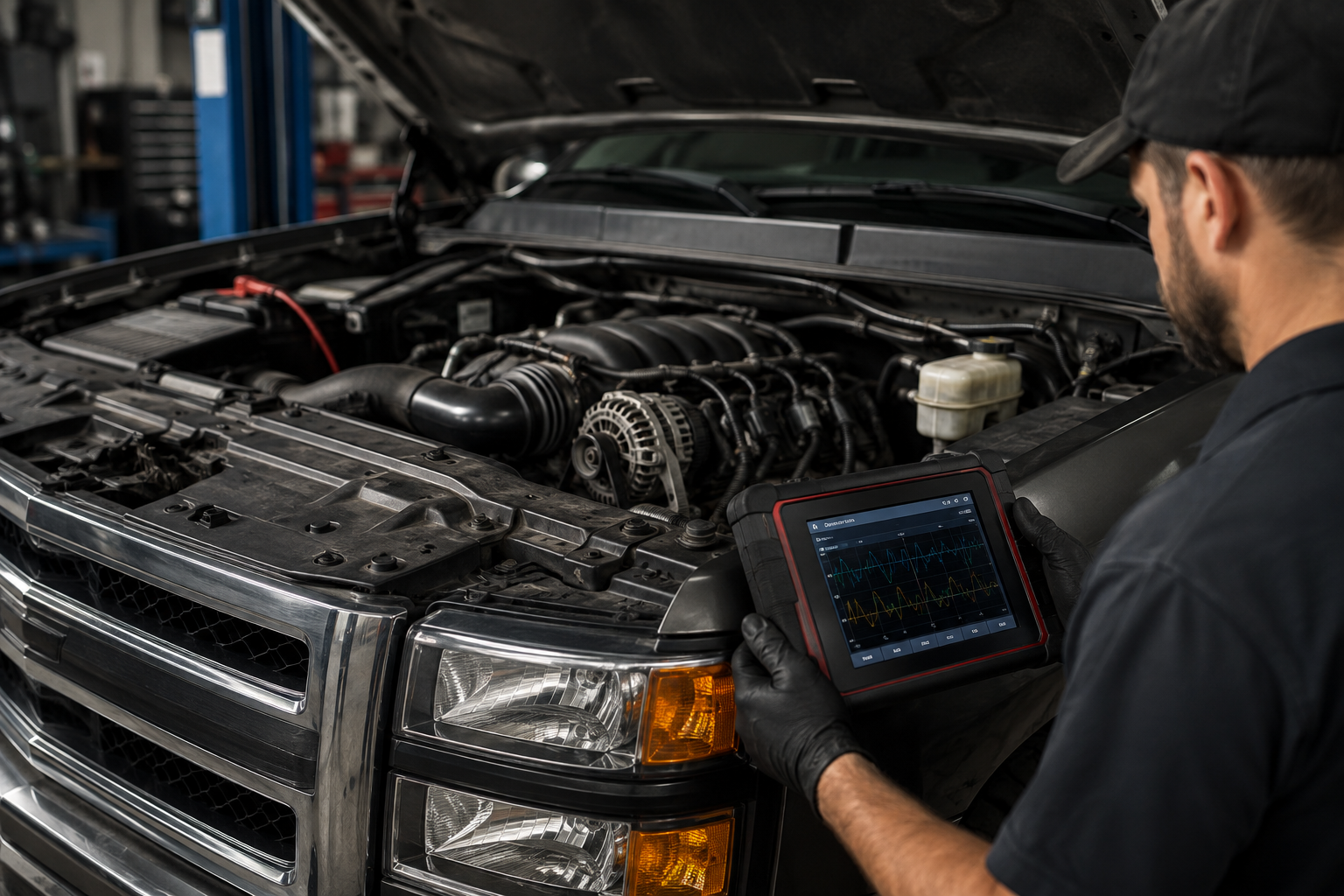
Diagnosing a lean condition isn’t about guessing,it’s about following a structured process. In our shop, we begin by analyzing fuel trim data using professional scan tools. This allows us to see how much the engine is compensating for the imbalance and whether the issue is consistent or intermittent.
As an ASE-certified shop, we rely on data-driven diagnostics rather than guesswork. This approach ensures we identify the root cause before recommending any repairs.
From there, we perform smoke testing to identify vacuum leaks that may not be visible during a standard inspection. This step is critical because even a small leak can create significant drivability issues. We also evaluate sensor data in real time, checking how the MAF sensor, oxygen sensors, and fuel system components are behaving under different conditions.
This process requires both experience and the right equipment. This level of testing is what separates a temporary fix from a permanent solution.
Diagnosing a lean condition isn’t about guessing,it’s about following a structured process. In our shop, we begin by analyzing fuel trim data using professional scan tools. This allows us to see how much the engine is compensating for the imbalance and whether the issue is consistent or intermittent.
From there, we perform smoke testing to identify vacuum leaks that may not be visible during a standard inspection. This step is critical because even a small leak can create significant drivability issues. We also evaluate sensor data in real time, checking how the MAF sensor, oxygen sensors, and fuel system components are behaving under different conditions.
This process requires both experience and the right equipment. As an ASE-certified and AAA-approved shop, we rely on proven diagnostic methods rather than guesswork. This level of testing is what separates a temporary fix from a permanent solution.
When to Address a P0171 Code and What Happens If You Don’t
A lean condition may not seem urgent at first, but it can lead to serious problems over time. Running too lean can increase engine temperatures, which may damage valves, pistons, and catalytic converters.
We’ve seen situations where a minor issue escalates into significant engine damage simply because it wasn’t addressed early. In some cases, ignoring this code can eventually lead to needing major engine and auto repair in Bowling Green, KY, which could have been avoided with proper diagnosis.
In many cases, diagnosing a P0171 issue early is far less expensive than waiting until it leads to major engine damage. Addressing the issue early not only protects your engine, but also helps you avoid unnecessary expenses.
A lean condition may not seem urgent at first, but it can lead to serious problems over time. Running too lean can increase engine temperatures, which may damage valves, pistons, and catalytic converters.
Addressing the issue early not only protects your engine, but also helps you avoid unnecessary expenses. A proper diagnosis upfront is always more cost-effective than repeated repairs that don’t solve the problem.
FAQ
Can you drive with a P0171 code on a Ford or Chevy?
While the vehicle may still run, driving with a lean condition can cause long-term engine damage. It’s best to have the issue diagnosed as soon as possible.
Why does my check engine light keep coming back after repairs?
In many cases, the root cause was never properly identified. Replacing parts without confirming the source of the issue often leads to temporary fixes instead of permanent solutions.
How much does it cost to fix a P0171 code?
The cost depends on the root cause. Minor issues like vacuum leaks may be inexpensive, while fuel system or engine-related problems can be more involved. Proper diagnostics helps avoid unnecessary repairs and keeps costs under control.
Why does my check engine light come back after repairs?
In many cases, the root cause was never properly identified. Replacing parts without confirming the source of the issue often leads to temporary fixes instead of permanent solutions.
Can I keep driving with a P0171 code?
While the vehicle may still run, driving with a lean condition can cause long-term engine damage. It’s best to have the issue diagnosed as soon as possible.
Is fixing a P0171 code expensive?
The cost depends on the root cause. Some issues, like minor vacuum leaks, can be relatively inexpensive, while others involving fuel systems or engine components may require more extensive repair.
Get a Reliable Diagnosis You Can Trust
If your check engine light keeps coming back, the issue likely hasn’t been properly diagnosed. At Musser Automotive, we don’t guess and we don’t replace parts without a clear reason. Our ASE-certified technicians use proven diagnostic methods to identify the exact problem, so you can avoid unnecessary repairs and get your vehicle fixed right the first time.
Serving Bowling Green, KY and surrounding areas, we specialize in electrical diagnostics, engine performance issues, and complex repairs on American vehicles. Whether your vehicle is showing early symptoms or has been misdiagnosed elsewhere, we’re here to give you clear answers and a straightforward path forward.
If you’re ready to stop guessing and get a real solution,
schedule a diagnostic appointment in Bowling Green today or call us directly at
(270) 904-0267.